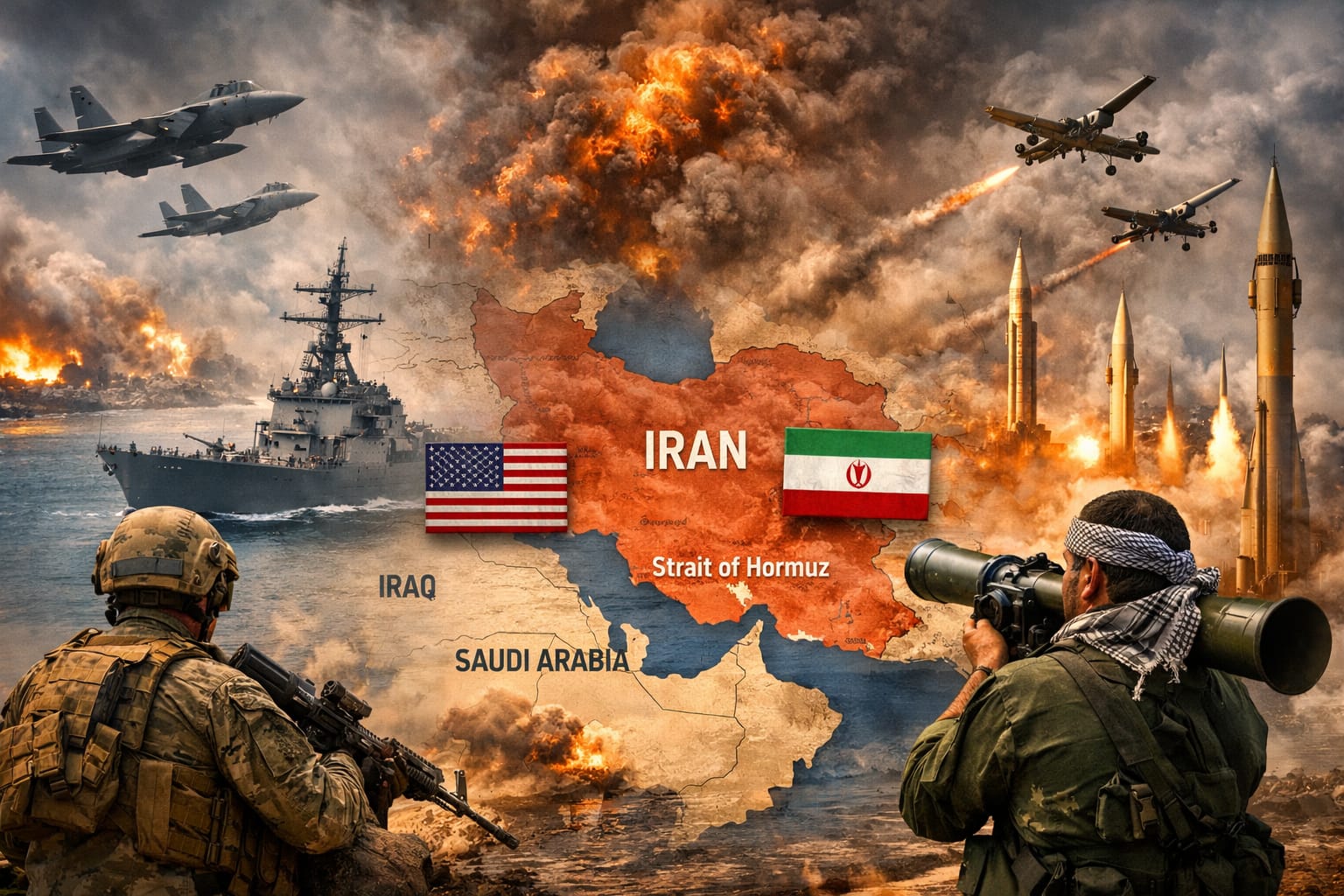
The escalating tensions between the United States and Iran in 2026 have precipitated one of the most severe geopolitical crises in the contemporary Middle East. A series of military strikes, retaliatory actions, and threats against vital global shipping lanes have fueled widespread apprehension regarding a potential regional conflict and its substantial ramifications for the world economy. ### Background of the Conflict The current crisis intensified significantly on February 28, 2026, following coordinated airstrikes launched by the United States and Israel against numerous military installations within Iran. These targeted operations focused on Iranian military infrastructure and key strategic assets. In immediate response, Iran initiated ballistic missile and drone attacks against Israeli targets and U.S. military bases situated throughout the Middle East, including installations in Bahrain, Kuwait, and other Gulf nations. This rapid escalation transformed the isolated incident into a broader regional confrontation involving several states and various armed factions. ### The Strait of Hormuz Crisis A central element of this conflict is the Strait of Hormuz, a narrow maritime passage through which approximately 20% of the world’s crude oil supply transits. Iran has issued explicit threats to obstruct or severely restrict access to the strait for vessels belonging to the U.S. and its allies. This threat has already caused significant disruption to established shipping routes, compelling numerous oil tankers to halt operations or undertake lengthy detours. Reports confirm a sharp decline in maritime activity within the strait following multiple documented attacks on commercial vessels and explicit warnings issued by Iran. ### Intensification of Military Actions The conflict has been marked by several significant military developments: * U.S. airstrikes successfully targeted Kharg Island, Iran’s primary oil export hub, reportedly destroying over 90 military installations. * Iran retaliated by launching missile and drone assaults against U.S. and allied positions across the Gulf region. * Reports have surfaced of drone strikes and explosions near critical infrastructure, including airports and major oil processing facilities. These aggressive actions have substantially elevated the risk of a wider, more devastating war across the Middle East. ### Global Economic Repercussions The crisis is already exerting measurable pressure on the global economy: * Due to pervasive supply insecurity, oil prices have dramatically surged, exceeding $100 per barrel. * Supply chains for essential goods, such as fertilizers and pharmaceuticals, face disruption across multiple regions. * Financial markets are exhibiting heightened volatility as investors grapple with the prospect of long-term instability in critical energy markets. Economic analysts caution that a sustained conflict could precipitate a global economic slowdown or even trigger a recession. ### Diplomatic Engagement Various nations are actively engaged in diplomatic efforts aimed at de-escalation. For instance, India has been facilitating discussions with Iran in an attempt to ensure the continued free passage of energy shipments through the Strait of Hormuz. Nevertheless, international alignment remains fractured, with several European nations expressing reluctance to participate actively in military operations within the region. ### Conclusion The US-Iran crisis of 2026 has evolved into a critical global issue due to its military trajectory and profound economic consequences. The situation remains inherently volatile, characterized by persistent military exchanges, ongoing diplomatic maneuvers, and pervasive uncertainty regarding whether the conflict will intensify further or ultimately move toward a cessation of hostilities.