Introduction
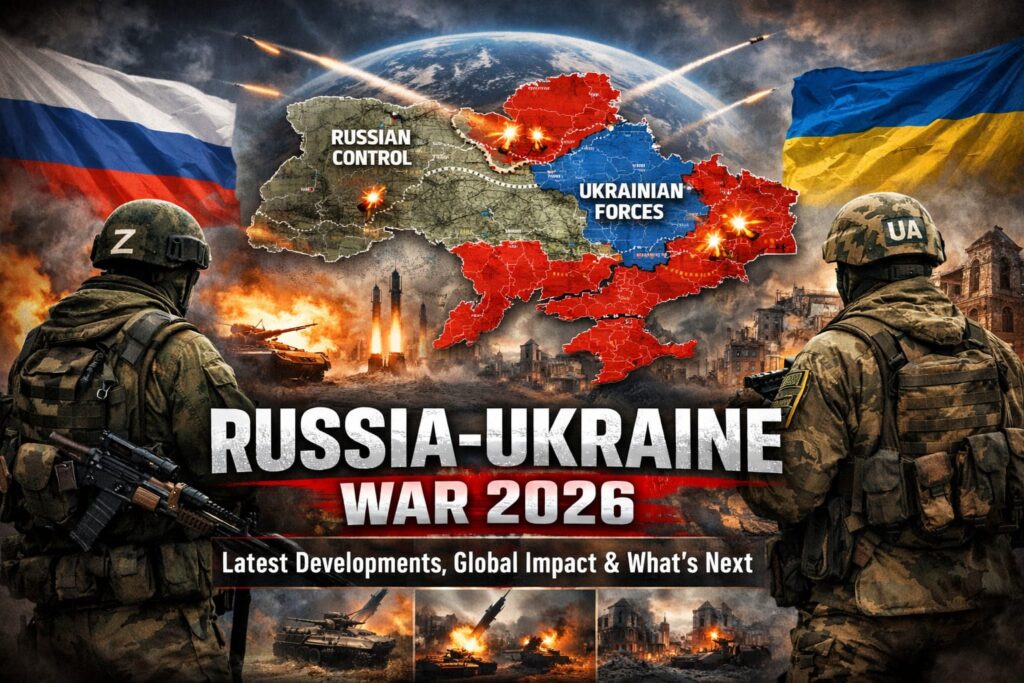
The war between Russia and Ukraine remains one of the most significant geopolitical conflicts in the world today. Since the start of the full-scale invasion in 2022, the war has reshaped global politics, energy markets, and international security.
As of 2026, fighting continues across several key frontlines, with both sides facing heavy military, economic, and political pressures.
Current Battlefield Situation
Recent reports indicate that intense fighting continues in eastern and southern Ukraine. Ukrainian forces are focusing on defensive operations while attempting limited counter-offensives in strategic areas.
Key developments include:
Heavy artillery battles along the eastern front
Drone warfare becoming a dominant tactic
Ongoing missile strikes targeting infrastructure
Both sides are using advanced technologies such as surveillance drones, precision missiles, and electronic warfare systems.
International Support for Ukraine
Ukraine continues to receive military and financial assistance from Western allies, including members of NATO and the European Union.
Support includes:
Air defense systems
Armored vehicles and artillery
Economic aid packages
Training for Ukrainian troops
This support has helped Ukraine maintain resistance despite Russia’s larger military resources.
Russia’s Military Strategy
Russia has focused on strengthening defensive positions in occupied territories while continuing offensive pressure in certain regions.
Military analysts say Russia is attempting to:
Consolidate control over captured regions
Disrupt Ukrainian supply lines
Pressure Ukraine through infrastructure attacks
The conflict has increasingly become a war of attrition, with both sides trying to weaken the other over time.
Global Economic Impact
The war has had major global consequences.
Key impacts include:
Rising energy prices in many countries
Disruptions in global grain supply
Increased military spending worldwide
Ukraine and Russia are both major exporters of wheat and other agricultural products, meaning the conflict continues to affect food security in several regions.
Humanitarian Situation
Millions of civilians have been displaced since the war began. Cities across Ukraine have suffered significant damage from missile strikes and artillery shelling.
International organizations continue to provide humanitarian aid, including food, medical supplies, and shelter support for affected populations.
What Could Happen Next?
Experts believe several scenarios are possible in the coming months:
Continued stalemate with slow territorial changes
A renewed large-scale offensive by either side
Diplomatic negotiations leading to a ceasefire
However, peace talks remain complicated due to deep political and territorial disagreements.
Conclusion
The Russia–Ukraine war remains a defining global conflict of the decade. While the battlefield situation continues to evolve, the war’s effects are being felt far beyond Eastern Europe.
The coming months will likely determine whether the conflict moves toward escalation, prolonged stalemate, or eventual diplomatic resolution.