


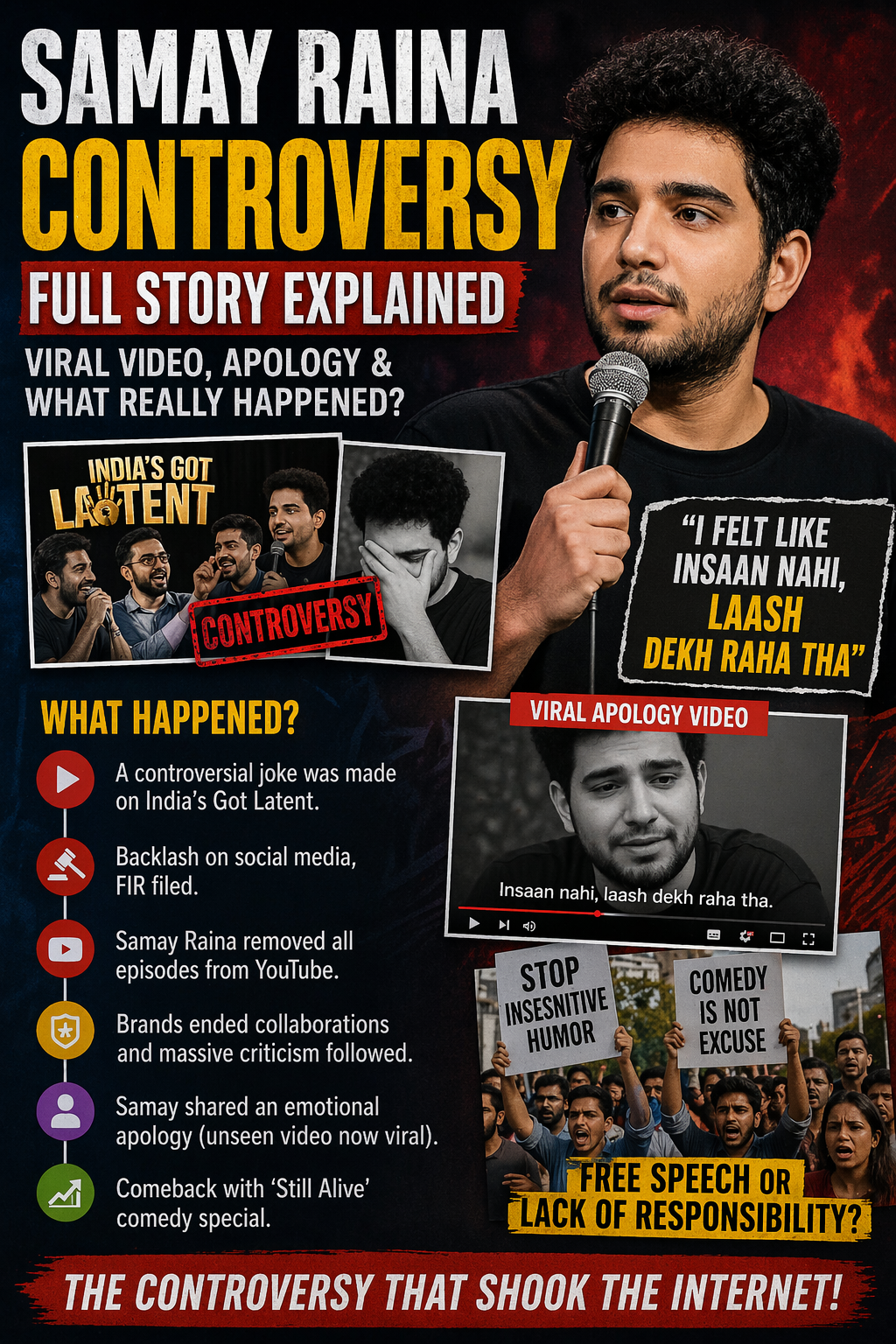
Samay Raina controversy is currently one of the most talked-about topics on the internet.
Introduction
In the rapidly evolving world of digital entertainment, controversies are no longer isolated incidents—they are amplified, dissected, and immortalized by the internet. One such case that recently resurfaced and reignited debate is the controversy surrounding . What began as a comedic experiment in edgy humor turned into a nationwide conversation about censorship, responsibility, and the limits of free speech in comedy.
This article explores the full timeline of the controversy, the role of viral content, the backlash from audiences and institutions, and the broader implications for creators in the digital age. By examining the incident in depth, we aim to understand not just what happened, but why it mattered—and why it continues to trend even today.
The Rise of Samay Raina
Before diving into the controversy, it is important to understand who Samay Raina is and why his actions drew such widespread attention. Known initially as a chess streamer and stand-up comedian, Samay built his reputation on humor that blended intelligence, sarcasm, and relatability. His transition into YouTube content creation allowed him to reach a wider audience, particularly among younger viewers.
His show, , was designed as a satirical take on talent shows. It featured comedians, influencers, and internet personalities engaging in unfiltered conversations, often pushing the boundaries of conventional humor. The show quickly gained popularity for its raw and unscripted nature.
However, this very authenticity would later become the source of its biggest controversy.
The Incident: What Triggered the Controversy
The controversy began during an episode of India’s Got Latent featuring several guests, including . Known for his podcast and motivational content, Ranveer’s presence on the show was expected to bring a different dynamic.
During the episode, a joke was made that many viewers found inappropriate and offensive. While comedy often thrives on pushing boundaries, this particular moment crossed a line for a significant portion of the audience. Clips from the episode were quickly extracted and circulated across social media platforms, often without full context.
As is common in the digital age, outrage spread faster than explanation.
The Role of Viral Clips and Context Collapse
One of the most critical aspects of this controversy is the role of viral clips. Short, out-of-context segments of the episode were shared widely, leading to what media scholars call “context collapse.” In such scenarios, content intended for a specific audience is consumed by a much broader and more diverse group, many of whom may not share the same expectations or understanding.
This phenomenon played a crucial role in amplifying the backlash. What might have been perceived as dark humor within a niche audience was interpreted as offensive and irresponsible by the general public.
The algorithm-driven nature of platforms like YouTube, Instagram, and Twitter further intensified the situation. Engagement—whether positive or negative—ensured that the clip reached millions within hours.
Public Backlash and Legal Consequences
The reaction was swift and intense. Social media platforms were flooded with criticism, with many users calling for accountability. Hashtags began trending, and the issue soon caught the attention of mainstream media.
More significantly, legal action followed. Reports indicated that an FIR (First Information Report) was filed against those involved, including Samay Raina. This marked a turning point, transforming the controversy from a social media debate into a legal matter.
Brands and sponsors, wary of reputational damage, began distancing themselves. Collaborations were paused or canceled, and the financial impact became evident.
Samay Raina’s Response
In the aftermath, Samay Raina took several steps to address the situation. One of the most notable actions was the removal of episodes of India’s Got Latent from YouTube. This decision signaled an acknowledgment of the seriousness of the backlash.
However, the most emotionally charged response came in the form of an apology video—one that, interestingly, was not initially released to the public. In this video, Samay appeared visibly distressed, expressing regret and describing the mental toll the controversy had taken on him.
He reportedly recorded multiple versions of the apology, struggling to find the right words. This detail highlights the internal conflict many creators face when navigating public criticism.
The “Unseen Apology” Goes Viral
Months after the initial controversy had subsided, an “unseen” apology video surfaced online. This clip quickly went viral, reigniting discussions around the incident.
In the video, Samay is heard saying that he felt emotionally numb, describing himself in stark terms that reflected deep distress. The rawness of the footage struck a chord with many viewers, leading to a shift in public perception.
While some continued to criticize him, others began to empathize, recognizing the human cost of internet outrage.
The Comeback: “Still Alive”
In an attempt to reclaim his narrative, Samay Raina released a comedy special titled “Still Alive.” The title itself was a statement—an acknowledgment of the controversy and a declaration of resilience.
In this special, he addressed the incident directly, using humor to process and reinterpret the experience. This approach is not uncommon in comedy; many comedians use personal struggles as material, transforming pain into performance.
The reception was mixed. While fans appreciated his honesty and courage, critics argued that he had not fully taken responsibility.
Comedy vs. Responsibility: A Broader Debate
The Samay Raina controversy is not just about one individual or one show—it reflects a larger debate about the role of comedy in society.
Where Should the Line Be Drawn?
Comedy has historically challenged norms and provoked thought. However, in an era of increased sensitivity and awareness, the boundaries of acceptable humor are constantly shifting.
Creators must navigate a complex landscape where:
Audiences are diverse and global
Cultural contexts vary widely
Content can be easily misinterpreted
The Burden of Influence
With millions of followers, influencers like Samay Raina wield significant power. This raises questions about responsibility. Should creators self-censor to avoid controversy? Or should they retain complete creative freedom?
There is no simple answer. The balance between expression and accountability remains a contentious issue.
The Impact of Cancel Culture
Another important dimension of this controversy is the role of cancel culture. While some view it as a tool for accountability, others see it as disproportionately punitive.
In Samay’s case, the backlash led to:
Loss of brand deals
Removal of content
Public scrutiny
Mental health challenges
The intensity of the response raises questions about proportionality. At what point does criticism become harassment? And how can platforms ensure a fair and balanced discourse?
Lessons for Content Creators
The incident offers several lessons for aspiring and established creators alike:
1. Context Matters
Content should be created with an awareness of how it might be perceived outside its intended audience.
2. Think Before Publishing
In the age of virality, even a single moment can define a creator’s career.
3. Transparency Helps
Acknowledging mistakes and communicating openly can mitigate backlash.
4. Mental Health is Crucial
The pressure of public scrutiny can be overwhelming. Support systems are essential.
Why the Controversy Still Trends
Even today, the Samay Raina controversy continues to trend for several reasons:
The release of previously unseen content
Ongoing debates about comedy and censorship
The enduring impact of viral media
Continued references in his new content
In many ways, the controversy has become part of his identity as a creator.
Conclusion
The story of Samay Raina is a reflection of the digital age—where creativity, controversy, and virality intersect in unpredictable ways. It highlights the power of the internet to elevate and dismantle, often within the same moment.
While opinions about the incident remain divided, one thing is clear: it has sparked an important conversation about the future of content creation. As audiences become more engaged and vocal, creators must adapt, finding ways to express themselves responsibly without losing their authenticity.
Ultimately, the controversy is not just about what was said or done, but about how society chooses to respond. It challenges us to consider the values we uphold, the standards we enforce, and the empathy we extend.
In a world where every moment can go viral, perhaps the most important lesson is this: behind every screen is a human being, navigating the complexities of expression in an unforgiving digital landscape.
https://app.groww.in/v3cO/9voxx2jp