


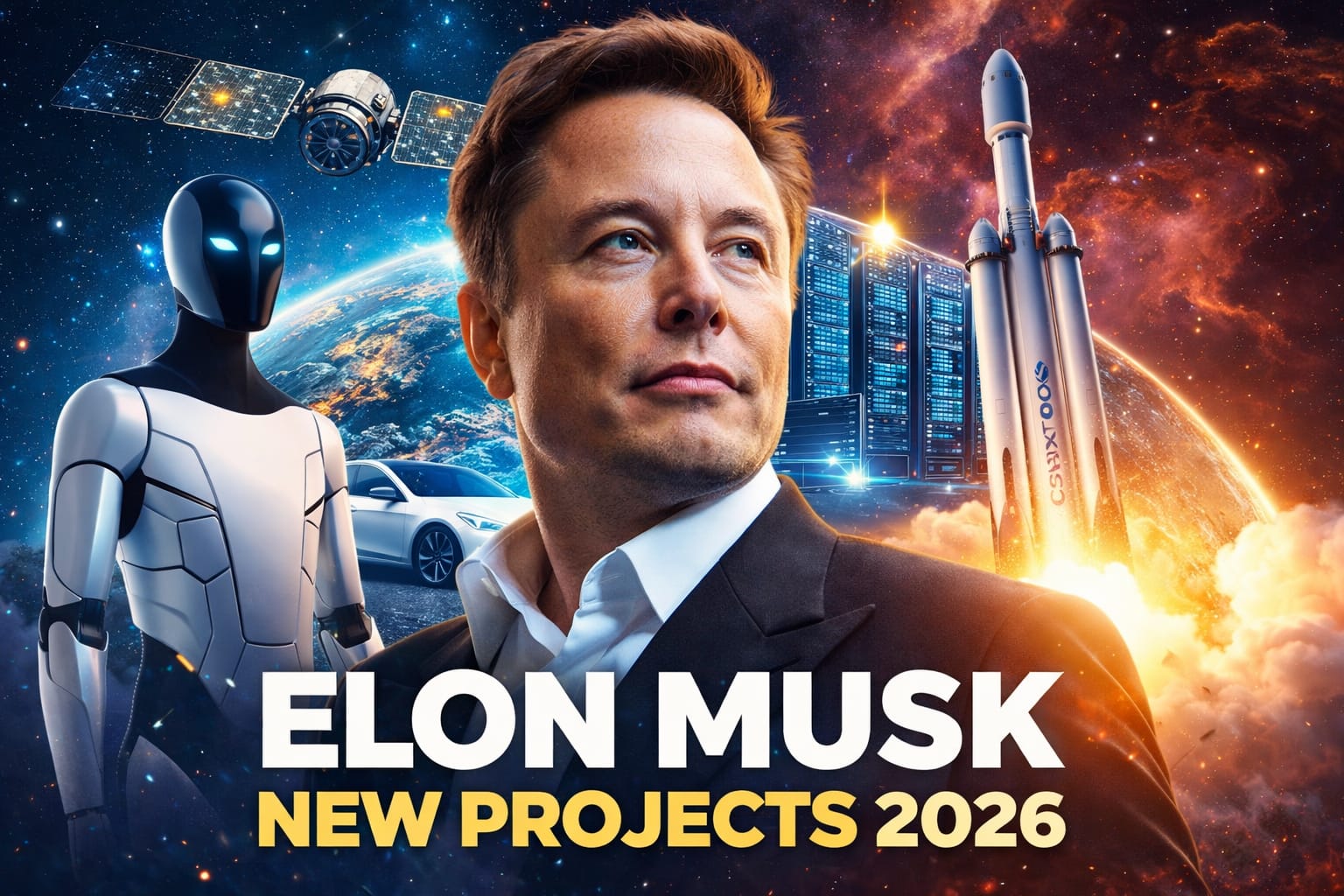
Elon Musk new projects 2026 are transforming the future of AI, Tesla, and SpaceX with groundbreaking innovations.
Introduction
Few individuals in modern history have shaped the direction of technology and innovation as profoundly as . Known for leading transformative companies like , , and , Musk continues to push boundaries in artificial intelligence, space exploration, and advanced manufacturing.
As of 2026, Musk’s latest projects signal a shift toward a more integrated technological future—one where AI, robotics, energy, and space systems are deeply interconnected. This article explores Musk’s newest initiatives, including advanced AI infrastructure, digital workforce systems, and the long-term vision of becoming a multi-planetary species.
—
The Strategic Shift: Why Musk is Doubling Down on AI and Infrastructure
Over the past decade, artificial intelligence has transitioned from a niche research field into a foundational technology driving nearly every industry. Musk, who has long warned about both the potential and risks of AI, is now heavily investing in building independent AI capabilities.
The motivation is simple: control over computation equals control over the future.
Rather than relying on third-party chip manufacturers or cloud providers, Musk’s ecosystem is moving toward vertical integration—designing, producing, and deploying its own AI hardware and software systems. This strategy mirrors what Tesla did with electric vehicles: reduce dependency, increase efficiency, and accelerate innovation.
—
Terafab: Building the Backbone of AI Power
One of the most significant rumored projects is what insiders refer to as the “Terafab” initiative—a large-scale AI chip manufacturing ecosystem.
What is Terafab?
Terafab is envisioned as a next-generation semiconductor production facility designed specifically for AI workloads. Unlike traditional chip factories, which produce general-purpose processors, Terafab would focus on high-performance AI chips optimized for:
– Autonomous driving systems
– Robotics and automation
– Large language models
– Real-time data processing
Why It Matters
The global demand for AI chips has skyrocketed, and supply constraints have become a major bottleneck. By building its own chip infrastructure, Musk’s companies can:
– Reduce reliance on external suppliers
– Optimize chips for specific use cases (e.g., Tesla Autopilot)
– Scale AI training and deployment faster than competitors
Integration Across Companies
The real power of Terafab lies in its integration:
– Tesla uses the chips for self-driving cars and robotics
– xAI uses them for training advanced AI models
– SpaceX could deploy them in satellite networks and space-based computing
This creates a unified ecosystem where hardware and software evolve together.
—
Digital Optimus: The Rise of the AI Workforce
Another major development is the concept of “Digital Optimus,” a system designed to automate white-collar work using advanced AI.
What is Digital Optimus?
Digital Optimus is essentially a virtual workforce powered by AI. It aims to perform tasks traditionally handled by humans, such as:
– Customer support
– Financial analysis
– Administrative operations
– Data management
Unlike simple automation tools, this system is designed to learn, adapt, and operate across multiple domains.
The Vision
Musk’s long-term goal is to create a world where:
– Routine work is handled by AI
– Humans focus on creativity and high-level problem-solving
– Businesses operate with significantly reduced overhead
This aligns with Tesla’s physical robot project (Optimus), but Digital Optimus focuses on the digital realm.
Implications
If successful, this could redefine the global job market. While it may increase efficiency, it also raises important questions:
– What happens to traditional jobs?
– How do economies adapt?
– What new roles will emerge?
—
AI Meets Space: The Next Frontier
Musk’s ambitions extend far beyond Earth. Through SpaceX, he is integrating AI into space infrastructure in ways that could reshape the future of computing and communication.
AI-Powered Satellites
SpaceX’s satellite network is expected to become more intelligent, enabling:
– Real-time data processing in orbit
– Autonomous satellite coordination
– Enhanced global internet coverage
Space-Based Data Centers
One of the more futuristic ideas involves placing data centers in space. While still in early stages, the concept offers several advantages:
– Reduced latency for global communication
– Access to solar energy without interruption
– Scalability beyond Earth’s physical constraints
Mars and Beyond
Musk’s ultimate vision remains unchanged: making humanity a multi-planetary species. AI will play a crucial role in this mission by:
– Assisting in autonomous construction on Mars
– Managing life-support systems
– Enabling communication between planets
—
The Role of xAI: Competing in the Intelligence Race
Founded to compete with leading AI organizations, xAI is central to Musk’s strategy.
Core Objectives
– Develop advanced AI models that rival or surpass competitors
– Ensure AI development aligns with human values
– Integrate AI deeply into Musk’s other ventures
Competitive Landscape
The AI race is intensifying, with major players investing billions. xAI’s advantage lies in its integration with real-world systems:
– Vehicles (Tesla)
– Space infrastructure (SpaceX) https://www.spacex.com/
– Manufacturing (Terafab)
This gives it access to vast amounts of real-world data, a critical factor in building powerful AI systems.
—
Tesla’s Expanding Role: Beyond Cars
While Tesla is widely known for electric vehicles, its role in Musk’s ecosystem is evolving.
AI and Autonomy
Tesla’s self-driving technology relies heavily on AI, making it a key testing ground for new innovations.
Robotics
The Tesla Optimus robot aims to handle physical labor, complementing Digital Optimus in the digital space.
Energy Integration
Tesla’s energy solutions, including solar and battery systems, provide the infrastructure needed to support large-scale AI operations.
—
Economic and Global Impact
Musk’s projects are not just technological—they have far-reaching economic implications.
Industry Transformation
– Manufacturing becomes more automated
– Transportation shifts toward autonomy
– Communication becomes more global and instantaneous
Job Market Evolution
While some jobs may disappear, new opportunities will emerge in:
– AI development
– Robotics maintenance
– Space technology
Geopolitical Influence
Control over AI and space infrastructure could redefine global power dynamics, making these projects strategically significant.
—
Risks and Challenges
Despite the excitement, these projects come with significant risks.
Technical Challenges
– Scaling AI systems efficiently
– Ensuring reliability in autonomous systems
– Managing energy consumption
Ethical Concerns
– AI replacing human jobs
– Data privacy issues
– Control and governance of powerful technologies
Financial Risks
Large-scale projects like Terafab require massive investment, and success is not guaranteed.
—
The Bigger Picture: A Unified Vision
What sets Musk apart is not just the scale of his projects, but how they connect.
– AI powers decision-making
– Chips provide the computational backbone
– Space expands the boundaries of civilization
Together, these elements form a cohesive vision of the future—one where technology enables humanity to transcend its current limitations.
—
Conclusion
Elon Musk’s new projects represent more than just technological advancements—they are steps toward redefining how society functions. From AI-driven workplaces to space-based infrastructure, the scope of these initiatives is unprecedented.
Whether all of these ideas succeed remains to be seen. However, one thing is certain: Musk is not just building companies—he is attempting to build the future itself.
As the world watches these developments unfold, the impact will likely be felt across every aspect of human life, from how we work and communicate to where we ultimately live.
—
Final Thoughts
The convergence of AI, manufacturing, and space exploration marks a turning point in human history. Musk’s projects may accelerate this transition, bringing both opportunities and challenges.
For individuals, businesses, and governments alike, the key question is not whether this future will arrive—but how prepared we are to adapt to it.